


Selling Through Nigeria’s Election Season: A B2B Pipeline Plan for November 2026 to March 2027

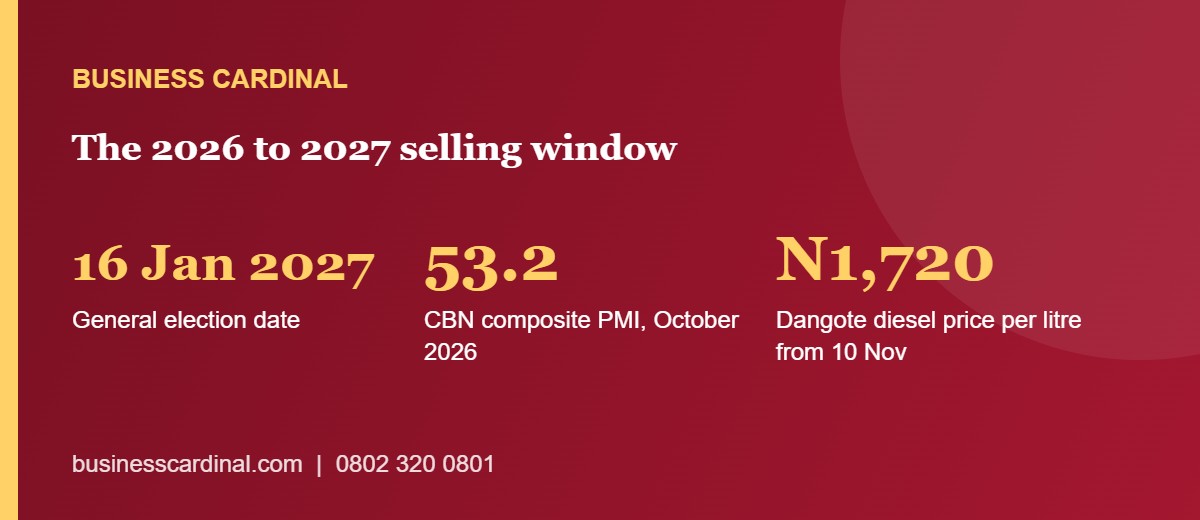
Nigeria goes to the polls on 16 January 2027. That date sits between the festive break and the first budget cycle of the new year. For B2B sellers, it creates a five-month stretch where buyers hesitate, approvals stall and forecasts slip.
You cannot move the election. You can control how your team qualifies, sells and follows up. This guide sets out a practical plan for sales leaders in solar and energy equipment, IT services, logistics, industrial supplies and professional services. It also shows how weekly B2B sales coaching can keep your pipeline honest from November 2026 to March 2027.
Why this season is different
Three forces meet in this window. First, the election itself. Many buyers prefer to see who controls budgets and policy before they commit capital. Second, the festive season. Decision makers travel, offices thin out and approvals wait for January. Third, costs. Businesses still feel the weight of energy and input prices.
The picture is not all gloomy. The Central Bank of Nigeria’s composite PMI rose to 53.2 in October 2026, according to Vanguard. That marked a fifth straight month of expansion. Dangote Refinery also cut its diesel price from N1,840 to N1,720 a litre on 10 November 2026. Lower diesel helps any firm running generators, trucks or plant.
So demand exists. Buyers are still spending. What changes is the speed and shape of their decisions. Your team must sell to a cautious buyer, not an absent one.
Start with a ruthless pipeline review
Every deal in your CRM tells a story. Some stories are true. Many are hope. Before November ends, run a full pipeline review with each seller.
Ask four questions of every opportunity:
- Is there a confirmed business problem the buyer has named in their own words?
- Do we know who signs, who influences and who can block?
- Is there a budget, or a clear path to one, in this financial year?
- Is there a date tied to a real event, such as a contract expiry, a project launch or a board meeting?
A deal that fails two or more of these questions does not belong in your forecast. Move it to a nurture stage. This is accuracy, and a clean pipeline lets you put scarce selling time where it counts.
Next, tag each deal by its exposure to the election. A solar installation for a private hospital may proceed whatever happens. A large IT contract tied to a state government agency may freeze until new officials settle in. Logistics contracts linked to import volumes may depend on exchange rate moves. Label each deal as low, medium or high election sensitivity. Then plan your effort accordingly.
| Election sensitivity | Typical example | Where to put effort |
|---|---|---|
| Low | Solar system for a private hospital | Push to close before Christmas |
| Medium | Logistics contract tied to import volumes | Phase the deal and agree a February review |
| High | IT contract with a state agency | Stay close, build the case, expect a Q2 decision |
Qualify harder, not faster
In a slow market, sellers often chase every lead to fill the gap. That instinct wastes time. Tighten your qualification instead.
Use a simple test. Can the seller explain, in two sentences, why this buyer must act before April 2027? If not, the deal is not qualified for this quarter. Push the seller to find the compelling event. It might be a diesel bill that keeps rising, a fleet that keeps breaking down or an audit finding that demands new IT controls.
Strong qualification also protects margin. Buyers without urgency will push hard on price. Buyers with a real problem care more about outcomes.
Map the buying committee
Most B2B purchases in Nigeria involve more people than the seller first meets. A solar or inverter deal for a manufacturer may involve the managing director, the finance director, the plant engineer and a procurement officer. An IT services contract may need the chief information officer, the head of risk and the chief executive.
Build a simple map for every major deal. List each person, their role in the decision and their personal stake. Note who supports you, who is neutral and who resists. Then ask what each person needs to hear.
The finance director wants cost savings and payment terms that protect cash. The engineer wants reliability and after-sales support. Procurement wants compliance and a clean paper trail. The managing director wants the risk removed. One pitch will not satisfy all four.
During an election season, add one more column: who is most worried about the political outcome? That person often drives the “let’s wait” message. Find them early and address their concerns directly.
Multi-thread every key account
Single-threaded deals die quietly. Your contact travels for the holidays, changes roles or loses interest, and the deal stalls with no warning. Between November and March, that risk rises sharply.
Set a rule. Every deal above a set value needs at least three active contacts at the buyer. Active means a conversation in the last 14 days. Sellers should reach across functions, not just up the hierarchy. A logistics seller might connect with the supply chain manager, the finance team and the warehouse lead.
Multi-threading also gives you early warning. If one contact goes silent but two others stay engaged, the deal is still alive. If all three go quiet, you know to act or to downgrade it.
Ask consultative discovery questions
Good discovery uncovers the cost of doing nothing. That cost is your best weapon against delay. Train sellers to ask questions that make the buyer think about the next six months, not just today.
Useful discovery questions for this season include:
- “What happens to your operations if this decision moves to April?”
- “How much are you spending each month on the current setup?”
- “Which projects in your 2027 plan depend on solving this first?”
- “Who else in the business feels the impact of this problem?”
- “What would make this a safe decision to take before the elections?”
- “How did the last election period affect your business, and what did you learn?”
The last question invites the buyer to share their own experience. It also avoids any political view. Keep every conversation neutral. Sellers should never offer opinions on parties or candidates. The focus stays on the buyer’s business.
Build the business case in naira terms
Abstract benefits do not survive a cautious approval meeting. Buyers need numbers they can defend to their board. Build every business case in naira, using the buyer’s own figures.
For solar and energy equipment, start with the client’s monthly diesel spend. Show how much they pay today, how much the system saves and how long payback takes. The recent diesel price cut changes the maths, so update it. Show the buyer a range of diesel prices so the case holds even if prices move again.
For IT services, quantify downtime. How many hours did systems fail last quarter? What did each hour cost in lost sales or staff time? For logistics, measure the cost of late deliveries, damaged goods or idle trucks. For industrial supplies, show the cost of a plant stoppage when a part fails. For professional services, link the fee to a risk avoided or a revenue gain.
Keep the case short. One page is enough. Use the buyer’s numbers, show the cost of waiting and state the return clearly. Then ask your champion to test it with their finance team before the formal presentation.
Handle “let’s wait until after the elections”
You will hear this line often. Do not argue. Explore it.
Start by acknowledging the concern. Then ask what specifically would change after the election. Often the buyer cannot name anything concrete. Sometimes they can, and that is useful information.
Here is a simple framework your team can use:
- Acknowledge. “That makes sense. Many of our clients are thinking the same way.”
- Clarify. “What would you need to see after January to feel confident?”
- Quantify. “If we wait until April, what does the delay cost you each month?”
- Reduce risk. “Could we start with a smaller phase now and expand later?”
- Agree a next step. “Can we lock in a review date in February?”
Phased delivery works well in this season. A solar firm might install one site first. An IT firm might run a pilot. A logistics provider might take one route before the full network. Smaller commitments feel safer, and they keep the relationship moving.
If the buyer still wants to wait, accept it gracefully. Agree a specific date to reconnect, and record the reason in your CRM. A deal with a documented reason and a date is far easier to revive.
Hold firm on pricing and payment terms
Uncertain periods tempt sellers to discount. Resist that pressure. A discount offered in panic rarely closes the deal faster. It lowers your margin and trains the buyer to wait for more.
Set clear rules before the season starts. Define who can approve discounts and by how much. Require a trade for every concession. If the buyer wants a lower price, ask for a larger order, a longer contract or faster payment in return.
Payment terms matter even more than price right now. Cash is tight for many businesses, and late payment hurts suppliers badly. Protect your cash flow:
- Ask for a deposit before you order equipment or start work.
- Tie payments to clear milestones.
- Set validity periods on quotes, especially where you import parts.
- Include clauses that address currency movements on imported goods.
- Check the credit history of new clients before extending terms.
A signed deal with poor terms can cost more than no deal at all.
Plan your Q1 2027 accounts now
January will start slowly. Offices reopen after the holidays, and then the election takes attention. Many buyers will not make big decisions until late January or February. Use November and December to prepare.
Ask every seller to build a short account plan for their top ten accounts. Each plan should cover:
- The client’s main business goals for 2027
- Current spend with you and with competitors
- Open opportunities and their stage
- The buying committee map
- Risks, including election sensitivity
- Three specific actions for January and February
Account planning shifts the team from reacting to leading. When buyers return in February ready to act, your sellers will already have a proposal, a business case and the right contacts in place.
Set a sales coaching cadence for managers
This is where B2B sales coaching earns its value. In a slow market, sellers lose confidence. They avoid hard conversations and let deals drift. Managers must step in with a steady rhythm of coaching, not occasional pep talks.
A practical cadence looks like this:
- Weekly one-to-one (30 minutes). Review the top five deals. Ask what changed, what the next step is and what could block it.
- Weekly team pipeline meeting (45 minutes). Review movement across stages. Celebrate progress and flag stalled deals.
- Fortnightly deal clinic (60 minutes). Pick one complex deal and work through it as a team. Map the committee, test the business case and role-play objections.
- Monthly skills session. Focus on one skill, such as discovery questions, negotiation or handling delay.
- Ride-alongs or call reviews. Join at least one live call per seller each fortnight. Give feedback the same day.
Good coaching asks questions rather than giving answers. Instead of “send them a proposal”, ask “what does the buyer need to see before a proposal makes sense?” This builds the seller’s judgement, not their dependence on the manager.
Managers should also watch for burnout. Long gaps between wins drain energy. Recognise effort, not just closed revenue. Praise a well-run discovery call or a strong account plan.
Keep your CRM clean
A CRM full of stale deals gives false comfort. During this season, data hygiene matters more than ever. Leaders need an accurate view to make decisions on hiring, stock and cash.
Set clear standards:
- Every open deal has a next step with a date.
- Close dates reflect reality, not hope.
- Deals with no activity in 30 days get reviewed and either revived or closed.
- Every contact on the buying committee sits in the system.
- Reasons for delay or loss are recorded in plain words.
Make CRM updates part of the weekly one-to-one. If it is not in the system, it did not happen. This habit also gives you useful data later. When you review this election season in April, you will know which industries delayed, which objections came up and which tactics worked.
Track the right KPIs every week
Revenue alone is a lagging measure. By the time it drops, it is too late to act. Track leading indicators every week so you can spot problems early.
Focus on these KPIs:
- Pipeline coverage. The value of qualified pipeline against target. Aim for a healthy multiple, set by your own historic conversion rates.
- New qualified opportunities. How many deals entered the pipeline this week after passing qualification.
- Stage conversion rate. The share of deals moving from one stage to the next.
- Average deal age. How long deals sit in each stage. Rising age signals stalling.
- Contacts per deal. A measure of multi-threading.
- Meetings held with decision makers. Only those with people who can sign.
- Discount rate. The average discount given against list price.
- Days sales outstanding. How quickly clients pay after invoicing.
Review these numbers in the weekly team meeting. Look for trends, not single points. A steady fall in new opportunities in December is normal. A fall in decision-maker meetings in February is a warning.
Weekly coaching checklist for sales managers
Use this checklist every week from November 2026 to March 2027:
- Review each seller’s top five deals and confirm a dated next step for each
- Check that every major deal has at least three active contacts
- Confirm each deal’s election sensitivity tag is current
- Test one business case in naira terms with the seller
- Role-play the “let’s wait until after the elections” objection
- Review any discount requests and confirm a trade for each
- Check deposits and payment milestones on new contracts
- Clean deals with no activity in 30 days
- Review the weekly KPI dashboard with the team
- Join or review at least one live sales call
- Update top ten account plans for Q1 2027
- Recognise one example of strong selling behaviour
Turn the season into an advantage
Many of your competitors will pause selling until March. They will wait for the dust to settle. That creates space for disciplined teams. Buyers remember the supplier who stayed close, brought useful ideas and made decisions easier during an uncertain time.
Clean your pipeline. Qualify hard. Map the committee and reach several contacts. Build the case in naira. Hold your terms. Plan your accounts. Coach your team every week. When the market moves again, your sellers will be ready to close.
Frequently asked questions
What is B2B sales coaching, and why does it matter in an election season?
It is a structured routine where managers help sellers improve deals and skills week by week. In an election season, buyers slow down. Regular coaching keeps sellers focused on qualified deals and stops the pipeline drifting.
When is the 2027 general election, and how long will the slowdown last?
The general election is on 16 January 2027. Combined with the festive break, many B2B teams should plan for slower decisions from November 2026 into February or March 2027.
How should my team respond when a buyer says “let’s wait until after the elections”?
Acknowledge the concern, ask what would change after January and show the monthly cost of waiting. Offer a smaller first phase. If the buyer still waits, agree a firm review date and record it in your CRM.
Should we cut prices to close deals before the election?
No. Panic discounts lower margin and teach buyers to wait for more. Trade every concession for something of value, such as a larger order, a longer contract or faster payment. Protect your cash with deposits and milestone payments.
Which KPIs should sales managers track each week during this period?
Track pipeline coverage, new qualified opportunities, stage conversion, average deal age, contacts per deal, decision-maker meetings, discount rate and days sales outstanding. Watch the trends, not single weeks.
How Business Cardinal can help
Business Cardinal delivers sales training, sales coaching, sales consulting and business advisory for B2B teams across Nigeria. We run pipeline reviews, deal clinics and manager coaching programmes built for long buying cycles and uncertain markets. See our sales performance and incentive programme design, CRM implementation and customer retention strategy and business strategy and corporate advisory services.
To book a pipeline review for your team, call 0802 320 0801 or 0807 576 5799, email hello@businesscardinal.com, or visit businesscardinal.com.
This article is general guidance for sales leaders, based on public information available on 11 November 2026. It takes no position on any party or candidate.
Related Post

The Hidden Cost of Compliance in Nigeria’s MSME Sector
Print 🖨 PDF 📄 eBook 📱The Hidden Cost of Compliance in Nigeria’s MSME Sector Let…

Structuring Blended Finance Deals for African Markets
Print 🖨 PDF 📄 eBook 📱Structuring Blended Finance Deals for African Markets Africa has a…

Governance Structures for Family-Owned Businesses in Nigeria: A Guide to Smooth Succession
Print 🖨 PDF 📄 eBook 📱Governance Structures for Family-Owned Businesses in Nigeria: A Guide to…
