


Sales Training for Nigerian FMCG Teams: How to Sell When Shoppers Buy Less

Nigeria’s biggest consumer goods companies have just reported strong nine-month profits. Look underneath and a different story appears. Shoppers are buying less, and companies are spending more to keep them.
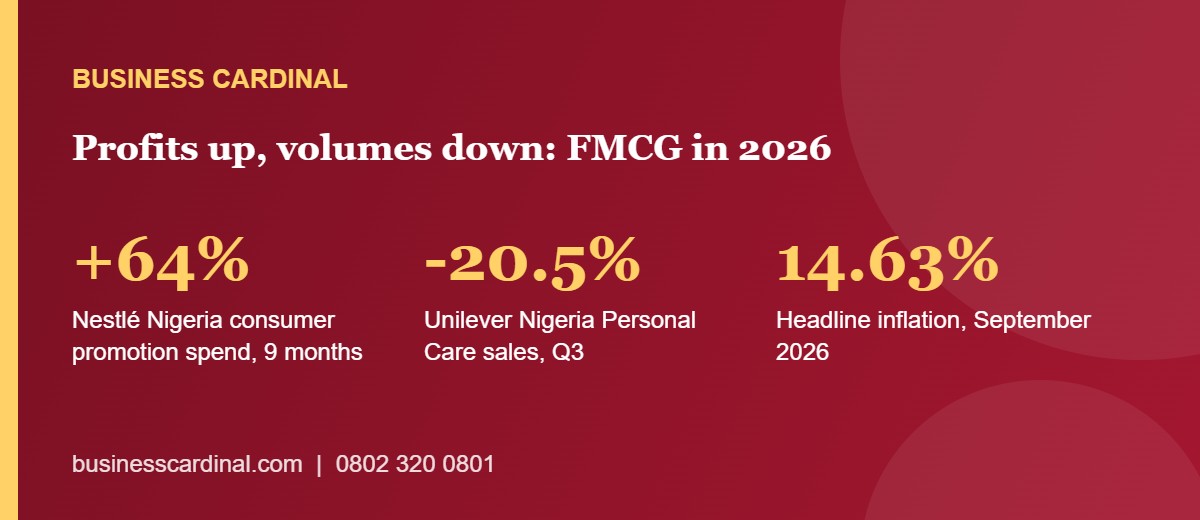
Nestlé Nigeria grew pre-tax profit 52% to ₦193.9 billion, but revenue rose only 10.4%. Its spending on consumer promotions jumped 64% to ₦60.8 billion. Cadbury’s selling and distribution costs more than doubled to about ₦20 billion. At Unilever Nigeria, Personal Care sales fell 20.5% in the third quarter, and the managing director said consumer demand came under pressure as household incomes stayed constrained. See Nairametrics’ review of consumer company results.
For sales leaders, this is the real message of 2026. Profit came from cheaper finance and price increases. Volume did not grow. In 2027, price increases will be harder to pass on, and the sales force will carry more of the load.
This article explains what has changed in the Nigerian market and what FMCG and distribution sales teams need to do differently.
What the 2026 numbers tell sales leaders
Shoppers are trading down. When incomes are squeezed, households keep buying food and essentials but cut back on items they see as optional. Unilever’s figures show this clearly. Its Foods business grew 27.2% in Q3 to ₦46.06 billion, while Personal Care fell to ₦11.40 billion. Shoppers still cook. They are buying fewer personal care items or cheaper ones.
Promotions are getting more expensive. A 64% jump in promotional spend at Nestlé shows how hard it is to hold volume. Promotions work in the short term. They also train buyers to wait for discounts.
Only a few beat inflation. Nairametrics noted that among consumer companies it reviewed, only Guinness grew sales faster than inflation. With inflation at 14.63% in September, most brands are shrinking in real terms.
The market noticed. The NGX Consumer Goods Index slipped in October while results came out, and fell again in the first week of November.
Why traditional FMCG selling is losing power
Many Nigerian sales teams still run on a simple model: push volume to distributors, offer a discount when targets slip, and reward the biggest orders. That model worked when prices were rising faster than costs and buyers had money.
It struggles now for three reasons:
- Distributors are cash-constrained. They cannot carry extra stock. Pushing volume creates returns, ageing stock and bad debt.
- Retailers are choosier. Shop owners stock what moves. A rep who cannot explain why a product will sell will not get shelf space.
- Discounts are eating margin. If every target is met with a promotion, the brand pays twice: lower margin now and weaker pricing later.
Five shifts for 2027
1. From pushing volume to growing sell-out
Measure reps on what leaves the retailer’s shelf, not what leaves your warehouse. That means asking retailers about their sales, helping them reorder the right mix, and reducing returns. A rep who improves a retailer’s turnover earns loyalty that discounts cannot buy.
2. From product pitch to buyer insight
Consultative selling starts with the buyer’s problem. A neighbourhood store owner in 2026 worries about cash tied up in slow stock. A supermarket buyer worries about margin per shelf metre. Teach reps to open with the buyer’s numbers and show how the right range improves them. Our consultative selling training builds this skill.
3. Sell the right pack size
Trading down does not always mean switching brands. Often it means smaller packs and lower price points. Sales teams should know which SKUs fit squeezed shoppers and push those where income is tight. This protects the brand while respecting the buyer’s budget.
4. Use promotions as a tool, not a habit
Set clear rules. Every promotion should have a goal, a time limit and a measure of incremental volume. Train reps to sell value before they offer a discount. Track whether volume returns to normal after the promotion ends.
5. Coach in the field, every week
Classroom training fades fast. Field coaching changes behaviour. Sales managers should ride with reps, observe calls and give specific feedback. Short, frequent coaching beats one annual course. See our sales coaching training.
Fix the incentive plan first
No training survives a bad incentive plan. If reps are paid on gross volume to distributors, they will keep pushing stock regardless of what they learned.
Review your plan against four questions:
- Does it reward sell-out and collections, not just orders?
- Does it reward profitable mix, not just volume?
- Does it penalise returns and overdue debt?
- Can a rep see weekly how they are tracking?
If the answer to any is no, change the plan before you invest in training. Our sales performance and incentive program design service can help.
The Nigerian context for 2027
Elections. Nigeria’s general elections take place in January 2027. Campaign spending can lift short-term demand in some areas while uncertainty slows business decisions in others. Sales plans should allow for uneven demand across regions.
Cheaper credit. The Monetary Policy Rate fell to 23% in September 2026. As borrowing costs fall, some distributors may expand. Sales teams should qualify which distributors have the cash discipline to grow.
Insecurity. Attacks in parts of Plateau, Taraba and the North-East affect routes and market days. Route planning and stock-in-transit risk belong in the sales plan.
How to measure if your sales team is improving
Track a short set of indicators monthly:
- Sell-out growth by retailer cluster
- Strike rate (calls that produce an order)
- Average order mix (share of priority SKUs)
- Returns as a percentage of sales
- Days sales outstanding by distributor
- Promotion spend as a percentage of revenue
Improvement in strike rate and mix, with flat or lower promotion spend, means the training is working. Our customer experience and mystery shopping work shows what is really happening at the shelf.
A 90-day sales capability programme
Training works when it follows a diagnosis and leads into coaching. A three-month structure keeps the effort focused.
Month 1: Diagnose. Ride along with a sample of reps in each region. Map how a typical call runs, from greeting to order. Pull strike rate, order mix and returns by territory. Run a short mystery shopping exercise to see what retailers and shoppers experience at the shelf. The diagnosis tells you which skills to train and which managers need support.
Month 2: Train and practise. Run a two-day consultative selling workshop built around your own products, retailers and price points. Use role plays based on real objections from the field. Train sales managers separately on coaching skills, because they will carry the change after the workshop ends.
Month 3: Embed. Start weekly field coaching with a simple observation form. Review the six indicators every month. Adjust the incentive plan wherever it rewards the old behaviour. By the end of the quarter you should see movement in strike rate and order mix.
Handling the five objections reps hear most
Squeezed retailers raise the same objections in every market. Reps who handle them well protect margin and win shelf space.
“I still have stock from last month.”
Ask which items are slow and why. Offer to help move them with better placement or a small display. Suggest a lighter order focused on the fast movers. You keep the relationship and learn what actually sells in that outlet.
“Your price is too high.”
Do not discount first. Compare margin per unit and rate of sale with the competitor’s product. A product that sells twice as fast at a slightly lower margin earns the retailer more each month. Show the arithmetic on paper.
“The other company gives me credit.”
Find out the terms and the retailer’s payment record. If credit is part of your policy, offer it as a reward for consistent payment, not as a sweetener for a first order. Credit given to win volume often returns as bad debt.
“Customers no longer buy this pack size.”
Treat this as market intelligence. Offer the smaller pack or lower price point, then report the feedback to marketing. Retailers notice when a rep listens and acts.
“Come back next week.”
Agree a specific day and what will be decided then. Leave something useful, such as a shelf plan or a price list, so the next visit starts from progress rather than from zero.
Building distributor partnerships that survive tight cash
Distributors are under the same cash pressure as retailers. Sales teams that treat them as partners, not dumping grounds, hold their routes when competitors lose theirs.
- Share sell-out data monthly so distributors stock to real demand.
- Agree a joint business plan each quarter with targets for volume, mix and collections.
- Tie credit limits to payment history, and review them every quarter.
- Train distributor sales staff alongside your own reps.
- Recognise distributors who grow collections and reduce returns, not only those who order the most.
Sales managers decide whether training sticks
Most training budgets go to frontline reps. The bigger return often comes from managers. A manager who coaches every week lifts the whole team. A manager who only chases the monthly number undoes the training within weeks.
Select managers for coaching ability, not just past sales results. Train them first. Measure them on team improvement, such as strike rate and returns across their territory. Our sales coaching training prepares managers for this role.
Use data to plan routes and visits
Many Nigerian sales teams still plan routes by habit. Reps visit the outlets they like and skip the difficult ones. With fuel and transport costs high, every wasted visit eats margin.
Start with a simple outlet classification. Rank retailers by sales value and growth potential, then set visit frequency to match. A high-value supermarket might need a weekly visit. A small kiosk might need one every two weeks, supported by a distributor van.
Track three numbers for each route:
- Visits completed against visits planned
- Orders per visit
- Average order value
Review them with each rep monthly. Routes with low orders per visit need either a different frequency or a different approach. Simple tools work. A shared spreadsheet or a basic sales app is enough to start.
Choosing a sales training partner
Not all sales training changes behaviour. Before you hire a provider, ask five questions:
- Will the programme start with a diagnosis of our team and market, or a standard course?
- Are role plays built on our products, retailers and objections?
- How will managers be equipped to coach after the workshop?
- Which indicators will we track to measure results, and over what period?
- Can you show results from FMCG or distribution clients in Nigeria?
A provider who cannot answer the fourth question is selling an event, not a result. Business Cardinal builds every programme on research into your market, including consumer surveys and market research, and agrees the measures with you before training starts.
Frequently asked questions
Why are Nigerian FMCG profits up while volumes are down?
Results show profits rose mainly from cheaper finance costs and price increases, while shoppers bought less and promotions rose sharply.
What is consultative selling?
A sales approach that starts with the buyer’s problem and numbers, then shows how your product solves it, rather than leading with product features or discounts.
How often should sales teams receive coaching?
Weekly field coaching produces better results than occasional classroom training.
Should we cut promotions in 2027?
Not necessarily. Make every promotion goal-driven, time-limited and measured for incremental volume.
How long does sales training take to show results?
Expect changes in strike rate and order mix within two to three months when training is followed by weekly field coaching.
How should reps respond when a retailer says the price is too high?
Compare margin per unit and rate of sale with the competing product before offering any discount. Faster-selling stock often earns the retailer more each month.
How should FMCG sales teams plan retail visits?
Classify outlets by sales value and growth potential, set visit frequency to match, and track visits completed, orders per visit and average order value for each route.
How Business Cardinal can help
Business Cardinal is a research-based sales training, sales coaching and sales consulting firm in Lagos. We deliver consultative selling, high performance selling, sales coaching and negotiation programmes, and we redesign sales incentive plans so they reward the right behaviour. Explore our sales effectiveness solutions.
Plan your 2027 sales programme: call 0802 320 0801 or 0807 576 5799, email hello@businesscardinal.com, or visit businesscardinal.com/contact.
Figures are from published company results and press reports as of November 2026.
Related Post

When Projects Stall: Early Warning Signals Investors Often Miss
Print 🖨 PDF 📄 eBook 📱When Projects Stall: Early Warning Signals Investors Often Miss The…
The Rise of Mini-Grids: Transforming Energy Access for Rural Enterprises
Print 🖨 PDF 📄 eBook 📱The Rise of Mini-Grids: Transforming Energy Access for Rural Enterprises…
The Role of Auditing in Enhancing Corporate Governance in Nigeria
Print 🖨 PDF 📄 eBook 📱The Role of Auditing in Enhancing Corporate Governance in Nigeria…
