


Nigeria’s New Economic Zones: What Investors Need to Know

Nigeria’s New Economic Zones: What Investors Need to Know
Let me ask you a question that every investor looking at Nigeria should consider.
Are you aware of the $66 billion opportunity in Nigeria’s Special Economic Zones?
Nigeria’s Special Economic Zones (SEZs) are transforming into catalysts for industrial growth and foreign investment. With recent developments including international funding and Africa’s first green industrial zone, these zones offer opportunities for both domestic and international investors.
This guide explores everything you need to know about Nigeria’s evolving SEZ landscape.
If you need professional support, market research services can help you evaluate SEZ investment opportunities.
What is a Special Economic Zone?
Before diving into Nigeria’s specific offerings, let us understand what sets these zones apart.
Definition
According to tutor2u , a Special Economic Zone (SEZ) is defined as “a region designated within a country to have more liberalised business policies and other government investments intending to increase investment and production.”
SEZs typically feature four key characteristics. They are geographically defined and physically secured areas. They operate under single management. They offer specific benefits to businesses located within their boundaries. They function as separate customs areas with streamlined procedures.

The current state of Nigeria’s SEZ landscape
Nigeria’s SEZ sector has grown, positioning the country as a destination for global investors seeking access to African markets.
Investment performance
According to the Oil & Gas Free Zone Authority (OGFZA) , Nigeria’s Special Economic Zones have attracted over $66 billion in Foreign Direct Investments (FDI) and N620 billion in Domestic Direct Investments (DDI). They have created approximately 35,000 direct and indirect jobs.
The manufacturing sector dominates with 45% of total investments. Services follow at 30%, and oil and gas at 11%. Trading, logistics, and agriculture sectors also contribute.
Strategic infrastructure developments
Nigeria’s SEZ infrastructure includes world-class facilities. The zones host Africa’s biggest oil refinery, the Lekki Deep Sea Port with capacity for approximately 6 million twenty-foot equivalent units (TEUs), a gas processing hub along the Atlantic Coast, and an oil and gas downstream manufacturing hub.
Major economic zones in Nigeria
Nigeria currently operates 14 functional Special Economic Zones, each offering advantages for specific industries.
Lagos Free Zone: the flagship development
The Lagos Free Zone represents Nigeria’s most ambitious SEZ project.
Recent investment breakthrough – In January 2025, IFC announced an equity investment of up to $50 million in Lagos Free Zone Company. This investment supports the development and expansion of Nigeria’s first deep-sea port-based, private special economic zone across the 860-hectare zone.
When fully operational, Lagos Free Zone is expected to create approximately 30,000 direct, indirect, and induced jobs. The zone is already home to major brands including Kellogg’s, Dano Milk, Colgate, BASF, ADM, and Tata International.
Other notable SEZs
Lekki Free Trade Zone focuses on manufacturing, trading, and logistics with excellent connectivity to Lagos markets.
Ogun-Guangdong Free Trade Zone is a China-Nigeria partnership specializing in light manufacturing and technology transfer.
Calabar Free Trade Zone is designated as Nigeria’s primary zone, offering strategic access to Central African markets.
Oil and Gas Free Zones (OGFZA) are specialized zones supporting Nigeria’s petroleum industry.
Regulatory framework and incentives
Nigeria’s SEZ regime operates under clear regulatory oversight while offering benefits that make doing business easier.
Governing authority
The Nigeria Export Processing Zones Authority (NEPZA) serves as the primary regulatory body overseeing SEZ operations. NEPZA provides single-window clearance services, ensuring streamlined approvals and reducing bureaucratic delays.
Tax and financial incentives
Investors in Nigerian SEZs enjoy tax benefits including a full exemption from all federal, state, and local government taxes for three consecutive years for new industrial undertakings. There is 100% exemption on import and export duties.
Capital repatriation is unrestricted. Foreign ownership up to 100% is permitted in most sectors. Domestic market access allows permission to sell up to 25% (in some zones up to 100%) of production in the Nigerian domestic market.
Operational benefits
Beyond tax incentives, SEZ operators benefit from exemption from all import and export licensing requirements, no expatriate quota restrictions, a one-stop approval system for permits and licenses, simplified compliance procedures, and access to superior infrastructure including reliable power, water, and transportation networks.
Recent policy developments and government support
The Nigerian government under President Tinubu has demonstrated commitment to maximizing SEZ potential.
Project Evergreen: Nigeria’s first green industrial zone
According to Sustainable Energy for All , Nigeria is establishing its first green industrial zone focused on renewable energy manufacturing. This initiative, overseen by the Presidential Committee on Climate Action and Green Economic Solutions, aims to reduce import dependency for renewable energy equipment while creating jobs.
Investment opportunities and sectoral focus
Nigeria’s SEZs offer diverse investment opportunities across multiple high-growth sectors.
Priority sectors
Manufacturing (45% of total SEZ investments) includes consumer goods production, automotive assembly, pharmaceuticals, textiles, food processing, and agro-processing.
Services (30% of investments) includes business process outsourcing, logistics and warehousing, technology and software development, and financial services.
Oil and gas specialized zones support downstream processing, petrochemical manufacturing, and equipment fabrication.
Emerging sectors include renewable energy manufacturing, technology and innovation hubs, agricultural processing, and education services.
Market access advantages
Nigeria’s economy is projected to grow by 3.7% by 2026, creating expanding domestic market opportunities. SEZs provide strategic access to West African regional markets (ECOWAS), Central African markets via Calabar, global markets through deep-sea port connectivity, and preferential trade agreements.

Challenges and considerations
While Nigeria’s SEZs offer substantial benefits, investors should be aware of certain challenges.
Infrastructure and power supply
Despite improvements within SEZ boundaries, Nigeria still faces broader infrastructure challenges. However, SEZ management typically provides reliable power, water, and road access within zone premises.
Regulatory compliance
Recent research indicates the need for clearer communication of incentive policies. Some zones have faced challenges with firms selling primarily to domestic markets rather than focusing on exports as intended.
Security considerations
While major SEZs maintain robust security within their boundaries, investors should conduct thorough due diligence on regional security conditions, particularly for zones outside major metropolitan areas.
Regulatory compliance and governance advisory for Nigerian businesses can help you navigate SEZ regulatory requirements.
Success factors for SEZ investment
To succeed in Nigeria’s SEZ environment, investors should consider these factors.
Due diligence essentials
Choose a zone aligned with your industry focus and supply chain needs. Evaluate the competence and track record of zone management. Verify availability of critical utilities and services. Understand target market dynamics, both domestic and export. Ensure thorough understanding of all applicable regulations.
Strategic partnerships
Successful SEZ operators often benefit from partnerships with local businesses for market knowledge, collaboration with zone management for operational support, engagement with industry associations, and relationships with financial institutions familiar with SEZ operations.
Long-term commitment
SEZ investments typically require multi-year commitment to realize full benefits. Companies should plan for initial setup, gradual scaling of operations, building local workforce capabilities, establishing supply chain relationships, and market development.
Future outlook and expansion plans
The future of Nigeria’s SEZ sector looks promising.
Expansion pipeline
Nigeria continues to approve new SEZ proposals. State governments increasingly recognize the value of attracting such zones to drive local economic development.
Integration with national development
SEZs are being integrated into Nigeria’s broader economic diversification strategy, moving away from oil dependency toward manufacturing and services.
Technology and innovation focus
Newer SEZs are emphasizing technology transfer, innovation hubs, and knowledge-based industries, reflecting Nigeria’s ambitions to participate in the fourth industrial revolution.
How to get started
For investors interested in establishing operations in Nigeria’s SEZs, the process is straightforward.
Application process
Select your zone by researching and identifying the SEZ that best fits your business needs. Prepare documentation including business plan, financial projections, and company documents. Submit your application directly to the zone management or through NEPZA. Applications are reviewed by the 19-member SEZ Board of Approval. Once approved, work with zone management for facility setup.
Required documentation
Typical requirements include a detailed business plan and feasibility study, company registration documents, financial statements and investment evidence, environmental impact assessment (for manufacturing), and technical specifications and layout plans.
Tax advisory and tax consulting services can help you optimize SEZ tax benefits.
Conclusion
Nigeria’s Special Economic Zones offer investors access to one of Africa’s largest markets with significant incentives and infrastructure support. With over $66 billion in attracted FDI and ongoing developments like the Lagos Free Zone expansion and Project Evergreen green industrial zone, the SEZ landscape continues to evolve.
Success requires thorough due diligence, strategic partnerships, and a long-term commitment. But for investors who get it right, Nigeria’s SEZs offer a pathway to manufacturing, services, and export growth in West Africa’s dominant economy.
Recommended reading from our blog
If you want to strengthen your investment strategy for Nigerian SEZs, these related articles will help.
Building a Risk-Aware Culture in Your Organization – Managing SEZ investment risks starts with organizational culture.
Board Evaluation: Why It Matters for Nigerian Businesses – Stronger oversight leads to better investment decisions.
Recommended services
Ready to explore Nigeria’s Special Economic Zones? These services are designed to help.
Market research services – SEZ opportunity assessment and sector analysis.
Due diligence and background verification – Zone and partner evaluation.
Contract documentation and review support – Investment agreement structuring.
Reference Links
The following authoritative sources were cited in this article:
-
International Finance Corporation (IFC) – IFC invests in Lagos Free Zone (January 2025)
-
Oil & Gas Free Zone Authority (OGFZA) – Special Economic Zones attract over $66bn FDIs (2024)
-
Nigeria Export Processing Zones Authority (NEPZA) – Stakeholders embrace global best practices (2023)
-
Sustainable Energy for All – Green industry SEZs for renewable energy manufacturing (2024)
-
tutor2u – Special Economic Zones definition
-
Business Cardinal – Research-based sales training, sales coaching and sales consulting firm in Lagos, Nigeria
Where to go from here
At Business Cardinal, we understand that navigating Nigeria’s Special Economic Zones requires local expertise, strategic insights, and comprehensive market intelligence. We provide market intelligence, site selection support, regulatory guidance, partner identification, feasibility studies, and ongoing research.
Contact us today to discuss how we can support your Nigerian investment journey.
📧 Email: hello@businesscardinal.com
📞 Phone: +234 802 320 0801
📍 Address: 5, Ishola Bello Close, Off Iyalla Street, Alausa, Ikeja, Lagos, Nigeria
Related Post

Business Permit vs. Expatriate Quota: What Foreign Investors in Nigeria Must Know
Print 🖨 PDF 📄 eBook 📱Business Permit vs. Expatriate Quota: What Foreign Investors in Nigeria…
Navigating Regulatory Approvals for New Businesses in Nigeria
Print 🖨 PDF 📄 eBook 📱Navigating Regulatory Approvals for New Businesses in Nigeria Get Started…
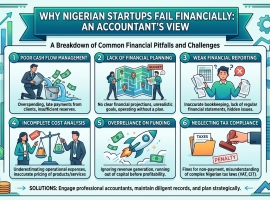
Why Nigerian Startups Fail Financially: An Accountant’s View
Print 🖨 PDF 📄 eBook 📱Why Nigerian Startups Fail Financially: An Accountant’s View Let me…

There are no comments