


Transforming Nigeria’s Traditional Retail Markets with Digital Tools

Transforming Nigeria’s Traditional Retail Markets with Digital Tools
Let me describe something remarkable happening right now across Nigeria.
In the sprawling open-air markets of Lagos, Kano, and Aba, places where commerce has been conducted through handshakes and cash transactions for generations, digital tools are quietly but powerfully taking hold.
A market woman in Alaba International Market checks her mobile payment app instead of counting crumpled naira notes. A spare-parts dealer in Nnewi uses a WhatsApp broadcast list to reach customers across the country. A retailer in Onitsha receives inventory delivery alerts on her smartphone without leaving her stall.
The transformation of Nigeria’s traditional retail markets with digital tools is not a distant future prospect. It is happening right now.
This article explores how digital technologies are being deployed in Nigeria’s informal and traditional retail sector, the challenges that remain, the latest developments reshaping the space, and what businesses and traders can do to position themselves for success.
If you need professional support, our digital retail transformation advisory for Nigerian businesses can help you navigate this evolving landscape.
The scale and significance of Nigeria’s traditional retail sector
Before examining the digital shift, let us understand just how dominant informal and traditional retail remains in Nigeria.
Nigeria’s retail sector is enormous. Small neighbourhood grocers, open-air stalls, and market traders form the backbone of this economy. According to industry data, informal retail accounts for up to 80 percent of consumer goods sales across key FMCG categories. MSMEs, most of which operate within traditional market settings, contribute roughly 65 percent of Nigeria’s GDP and provide over 80 percent of all employment.
Yet for decades, this sector operated without formal recordkeeping, digital payments, or access to credit and supply chain technology. Most transactions were cash-based. Inventory was managed by memory. Supplier relationships were built entirely on personal trust.
This informality, while culturally important, has held back productivity, limited access to financing, and made it difficult for manufacturers to reach last-mile traders efficiently.
The good news is that is changing. Rapidly.
Defining digital transformation in the retail context
Understanding what digital transformation actually means is essential for market traders, business owners, and policymakers alike.
According to Syracuse University School of Information Studies, digital transformation is “the strategic integration of digital technology into all areas of a business, changing how it operates and delivers value. It goes further than digitalization, rethinking business strategy and operations using digital capabilities, reimagining workflows, breaking down silos, and creating new models.”
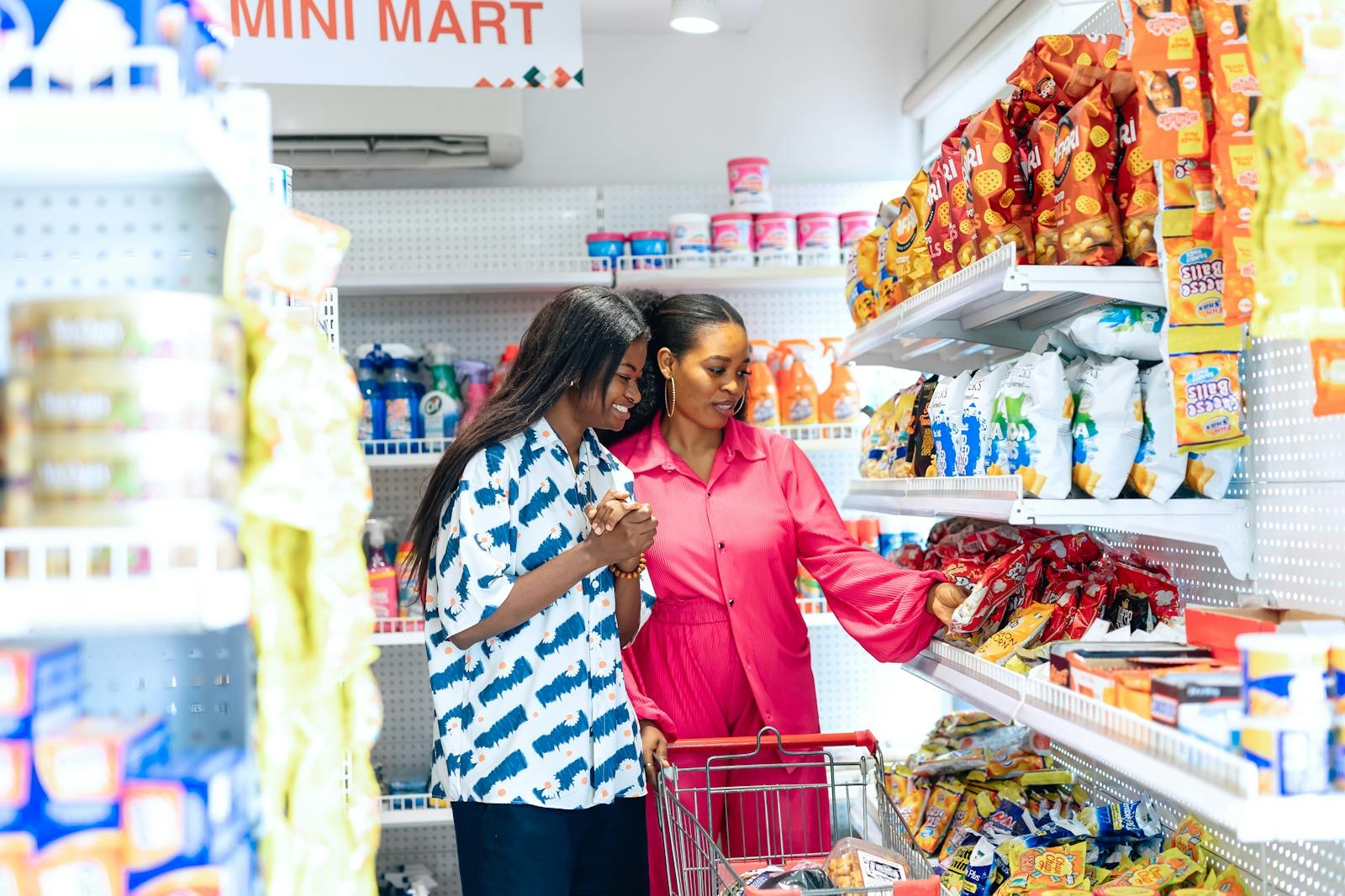
For a market woman in Alaba International Market or a spare-parts dealer in Nnewi, this translates practically. It means moving from a notebook to a mobile app. From cash-in-hand to mobile payment. From word-of-mouth advertising to an Instagram store.
Digital transformation is not about replacing the market. It is about equipping it with the tools to compete in a digitally driven economy.
Mobile payments and fintech: the gateway to digitisation
If there is one digital tool that has already made the greatest impact, it is mobile payments.
Nigeria’s payments ecosystem has reached record levels of activity. The Central Bank of Nigeria (CBN) cashless policy push and the proliferation of POS terminals, mobile wallets, and USSD-based banking have placed financial tools in the hands of traders who previously had no bank accounts.
Key platforms making this possible include Moniepoint, recognised as one of Africa’s fastest-growing firms, alongside OPay, PalmPay, and Paga. These collectively dominate the merchant solutions and informal sector payments space. USSD-based mobile money remains particularly important in markets where internet connectivity is unreliable, because it works on basic feature phones without a data connection.
However, adoption remains uneven. Cash remains king for the majority of small traders, reflecting persistent barriers of digital literacy, network reliability, and distrust of formal financial systems.
Despite this, the trajectory is unmistakably positive. Platforms that understand the specific dynamics of informal trade are gaining ground fast.
Inventory management, B2B platforms, and supply chain digitisation
Beyond payments, the next critical layer involves how traders manage stock, order from suppliers, and track performance.
Informal traders in Nigeria’s FMCG sector move roughly 90 percent of consumer goods nationwide. Yet most have no digital records of their inventory, no data on which products sell fastest, and no direct digital link to manufacturers. This information gap costs everyone money.
A new generation of Nigerian startups is addressing this directly.
Afiari offers a back-office and POS app for informal retailers, handling supplier management, purchase orders, inventory tracking, expense management, and daily WhatsApp performance reports.
OmniRetail connects over 150,000 small retail stores across Nigeria with manufacturers including Guinness, CHI, and Dufil Prima Foods, and topped the Financial Times list of Africa’s fastest-growing companies.
Alerzo focuses on informal retailers in underserved towns, particularly women-owned stalls, offering inventory delivery, digital payments, and mobile platform visibility.
TradeDepot connects manufacturers with informal vendors, enabling real-time market demand data and retailer behaviour insights.
These platforms are transforming the economics of informal trade by giving small retailers access to the same supply chain intelligence that large retailers have had for decades.
For support with supply chain digitisation, our digital supply chain and last-mile retail advisory can help.
Social commerce and digital marketing: from haggle to hashtag
Beyond backend operations, digital tools are reshaping how market traders present themselves and attract customers.
In markets across Lagos, Abuja, and Enugu, traders now showcase their products via Instagram Live, Facebook Marketplace, and TikTok short videos. QR codes and mobile money tags are appearing at stalls where only handshakes and cash existed before.
Social commerce, the sale of products directly through social media platforms, is one of the key growth drivers for Nigeria’s e-commerce sector. According to The Paypers, mobile commerce accounts for over 80 percent of all online orders in Nigeria, with WhatsApp playing a particularly powerful role in enabling peer-to-peer selling.
The B2C e-commerce market is forecast to grow at a strong compound annual rate through 2030. Fashion, consumer electronics, and personal care lead the categories, but informal traders selling food, crafts, and household essentials are increasingly capturing their share through social platforms.
What is new in 2026
The digital retail landscape is evolving at remarkable speed. Here are the most important recent developments.
National Digital Economy and E-Governance Bill.
This legislation provides a legal framework for electronic transactions, e-signatures, and electronic contracts. Industry analysts expect it to significantly boost trust in online retail.
Agentic AI enters retail.
At the Africa Retail Congress, industry leaders noted that Nigeria’s informal retail sector is uniquely positioned to leverage agentic AI. The near-future scenario involves a local trader interacting with an AI assistant that reminds them what to restock, tracks inventory, and drives sales.
Nigeria’s digital economy contributes substantially to GDP.
Nigeria’s digital economy contributed approximately ₦7 trillion to GDP, with telecommunications providing the connectivity backbone for digital retail, mobile banking, and online commerce.
Smartphone penetration reaches significant levels.
Nigeria has over 150 million mobile connections, representing a substantial percentage of the population. The majority of these connections now run on 3G, 4G, or 5G broadband networks.
Challenges that must be addressed
While the momentum is real, several critical barriers continue to slow the pace of transformation.
Digital literacy gap. Many traders, especially women and older market participants, lack the confidence and skills to operate smartphones, apps, or POS terminals independently. Training programmes remain unevenly distributed.
Power instability. Unreliable electricity supply disrupts the use of digital devices, charging infrastructure, and internet connectivity, particularly outside major urban centres.
Logistics deficiencies. Nigeria’s road infrastructure challenges complicate last-mile delivery for e-commerce orders and restocking fulfilment across many states.
Internet connectivity. Despite rapid growth, a significant portion of the population remains offline, constraining digital commerce tools that require stable data connections.
Trust and cybersecurity. Fraud concerns, particularly mobile money scams, continue to erode trust among informal traders. As reported by TechCabal, user education will be equally critical as technology improves.
Cost of digital tools. Subscription models for platforms can feel prohibitive for micro-retailers operating in Nigeria’s current inflationary environment.
Opportunities for businesses, traders, and investors
The challenges above are real, but they should not obscure the extraordinary range of opportunities that Nigeria’s digitising retail landscape presents.
According to Mordor Intelligence, Nigeria’s digital transformation market is expected to reach significant value by 2030, growing at a strong compound annual rate.
Key opportunity zones include:
B2B digital distribution platforms connecting manufacturers directly to informal traders via mobile apps create enormous efficiency gains and new revenue models.
Embedded finance and BNPL schemes tailored to traders’ cash flow patterns have significant unmet demand.
Data analytics for FMCG manufacturers providing real-time visibility into stock movement, price sensitivity, and consumer behaviour at the last-mile level is a major commercial opportunity.
Social commerce infrastructure helping informal traders build, manage, and monetise social media storefronts, especially on WhatsApp, is in high demand.
Logistics and last-mile delivery, as online orders from informal traders grow, represents substantial investment potential.
Key digital retail terms every Nigerian business leader should know
Digital Transformation. The strategic integration of digital technology into all areas of a business, changing how it operates and delivers value.
Social Commerce. The sale of products directly through social media platforms including Instagram, Facebook, and TikTok.
Agentic AI. Artificial intelligence systems that can act autonomously to achieve specified goals, making decisions without constant human intervention.
B2B Digital Distribution. Platforms connecting manufacturers directly to informal retailers, bypassing traditional distribution layers.
Embedded Finance. The integration of financial services like payments, lending, and insurance into non-financial platforms.
USSD Banking. Mobile banking that works on basic feature phones without an internet connection, using short codes.
Last-Mile Delivery. The final step of the delivery process from a distribution centre to the end customer.
Informal Retail. Retail operations conducted without formal registration, recordkeeping, or digital payment systems.
Omnichannel Retailing. A strategy that integrates physical stores, online platforms, and mobile channels into a seamless customer experience.
QR Code Payment. A payment method where customers scan a Quick Response code with their mobile phone to complete a transaction.
Recommended reading from the Business Cardinal blog
If you want to strengthen your digital retail strategy, these related articles will help.
Building a Risk-Aware Culture in Your Organization – Digital retail transformation requires a culture that manages technology risk. Read the Guide.
Board Evaluation: Why It Matters – Board Assessment Nigeria – Stronger Oversight – Strong board oversight is essential for digital transformation governance. Read the Article.
Corporate Governance Lessons from Nigerian Bank Failures – Some failures involved poor technology strategy. Learn from the past. Read the Guide.
Recommended services from Business Cardinal
Ready to transform your retail operations with digital tools? These services are designed to help Nigerian businesses succeed.
Retail Transformation Advisory for Nigerian Businesses – Comprehensive advisory for digital retail strategy and implementation.
Supply Chain and Last-Mile Retail Advisory – Supply chain digitisation and last-mile delivery optimisation.
Retail Technology Assessment and Implementation – Technology selection and implementation support.
Social Commerce and Digital Marketing Strategy for Retailers – Social commerce platform strategy and digital marketing.
Informal Retail Digitisation and Trader Enablement Advisory – Strategies for reaching and enabling informal retailers.
Where to go from here
Nigeria’s traditional retail markets are transforming. The businesses that understand this transformation and act now will be the ones that lead.
Start by assessing your digital readiness. Then identify the tools that address your biggest pain points. Then implement systematically.
The traders and businesses that embrace digital tools will be the ones that thrive.
Let’s work together
Is your business ready to capture the opportunities in Nigeria’s digitising retail landscape?
At Business Cardinal, we help Nigerian businesses navigate digital retail transformation with confidence. We understand the informal sector. We know the technology landscape. And we have practical experience helping organisations succeed.
Not theory. Not generic advice. Practical, actionable support tailored to your specific business.
Contact us today:
📧 Email: hello@businesscardinal.com
📞 Phone: +234 802 320 0801
📍 Address: 5, Ishola Bello Close, Off Iyalla Street, Alausa, Ikeja, Lagos, Nigeria
Contact Business Cardinal to discuss your digital retail strategy.
Let us help you build your edge in Nigeria’s digital economy.
Business Cardinal – Your Partner in Digital Retail Transformation
References
-
Syracuse University School of Information Studies – Digital Transformation Definition
-
Central Bank of Nigeria (CBN) – Cashless Policy Guidelines
-
Moniepoint – Informal Economy Report
-
TechPoint Africa – Afiari Digital Solution
-
OmniRetail – Retail Platform
-
The Paypers – Payments and E-Commerce Trends
-
TechCabal – Informal Economy Report
-
Mordor Intelligence – Digital Transformation Market
-
Inquirer Nigeria – From Stall to Screen
-
Nairametrics – Agentic AI in Retail
Related Post

Tech-Enabled Feasibility Studies: Using Drones, Sensors & Remote Mapping
Print 🖨 PDF 📄 eBook 📱Tech-Enabled Feasibility Studies: Using Drones, Sensors & Remote Mapping Here…
Data Protection Compliance Checklist for Businesses in Nigeria
Print 🖨 PDF 📄 eBook 📱Data Protection Compliance Checklist for Businesses in Nigeria Get Started…
Policy Predictability vs Policy Reality: How Businesses Can Plan Better
Print 🖨 PDF 📄 eBook 📱Policy Predictability vs Policy Reality: How Businesses Can Plan Better…

There are no comments