


Structuring Blended Finance Deals for African Markets

Structuring Blended Finance Deals for African Markets
Africa has a money problem.
Not because the continent is poor. Far from it. Africa has the world’s youngest population. Rapidly expanding cities. Enormous natural resources. Extraordinary investment opportunities everywhere you look.
The problem is a gap. A massive, stubborn gap between the capital available and the capital needed.
Estimates put it at $200 to $400 billion every single year. That is the shortfall between what Africa requires to meet its sustainable development goals and what it currently gets.
Traditional aid? About $50 billion annually. Not nearly enough.
Private investment? Africa gets less than 3 percent of global foreign direct investment despite having 17 percent of the world’s population.
So how do we bridge this gap? One answer is gaining serious traction. Blended finance.
This is not charity. It is not aid. It is a smart way to mix public or philanthropic money with private capital to get projects off the ground that would otherwise never happen.
Let me walk you through how blended finance works, why it matters for African markets, and how to structure deals that actually deliver results.
What is blended finance exactly?
Let us start with a clear definition.
According to the Organisation for Economic Co-operation and Development (OECD) , blended finance is the strategic use of development finance to mobilize additional finance toward sustainable development in developing countries.
In plain English? You take catalytic capital from public or philanthropic sources. You use it to reduce risk or improve returns. Then you bring in private investors who would otherwise stay on the sidelines.
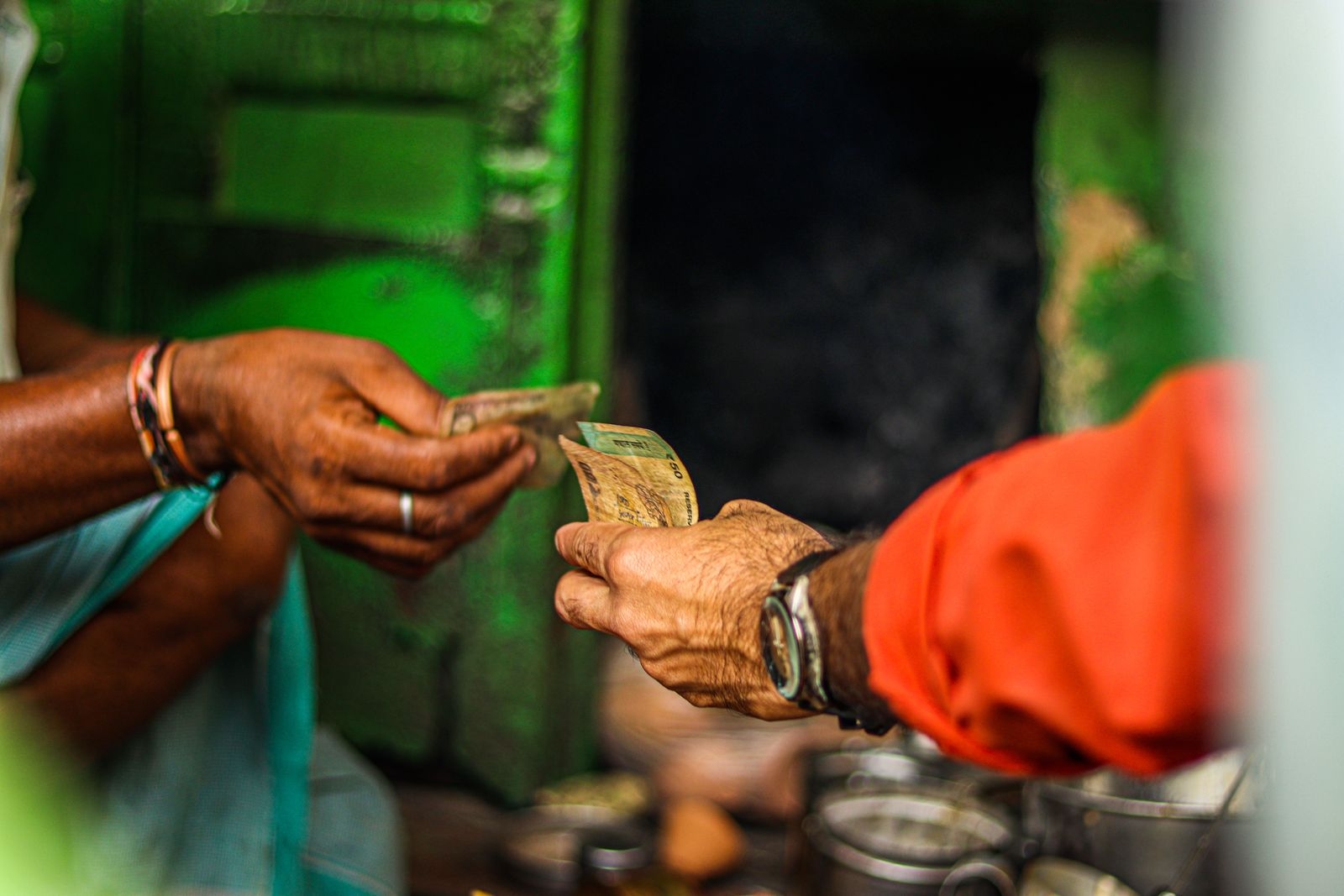
The magic word here is additionality. The concessional capital should enable investments that would not otherwise occur. If the market would have funded the project anyway, you are wasting resources.
Think of it as a bridge. Private capital sees too much risk. Concessional capital absorbs some of that risk. The project gets built. Jobs get created. Communities benefit. And eventually, the market learns to operate without the training wheels.
For organizations looking to understand this landscape, development finance and impact advisory can help you navigate the complexities.
Why blended finance matters for Africa right now
Africa’s financing gap is not academic. It is real. And it is urgent.
The African Development Bank estimates that infrastructure alone needs $130 to $170 billion annually. The gap after accounting for current investment levels? $68 to $108 billion.
Similar gaps exist across agriculture, healthcare, education, clean energy, and financial services.
Here is the thing. Global capital exists. Institutional investors manage over $100 trillion in assets. But they perceive African opportunities as too risky, too small, or lacking adequate investment vehicles.
Are those perceptions accurate? Sometimes. But often, the premium demanded by investors exceeds the objective risk level.
Take a renewable energy project in Kenya. Technically sound. Good market demand. Clear regulatory framework. Yet it might face financing costs double what a similar project in Eastern Europe would pay. The difference is not project quality. It is perception.
Blended finance addresses this by absorbing specific risks that deter commercial investors. A first-loss guarantee covering political risk might enable an investor to price based on project fundamentals rather than worst-case country scenarios.
The building blocks of blended finance
Successful blended finance transactions combine different types of capital in ways that optimize for risk, return, and impact. Here are the key components.
Concessional capital types
Grants and technical assistance sit at the most concessional end. They typically support project preparation, feasibility studies, and capacity building. They do not generate financial returns. But every dollar of project preparation grants can mobilize $10 to $20 of private investment.
Subordinated debt and junior equity accept lower returns and higher risk in exchange for enabling senior capital to achieve acceptable risk-adjusted returns. A common structure places concessional capital in first-loss positions, absorbing initial losses and protecting senior investors.
Guarantees and risk insurance protect against specific risks. Currency convertibility. Political violence. Breach of contract. Credit defaults. These instruments are highly capital-efficient because they only deploy capital if guaranteed events occur. Leverage ratios frequently exceed 10 to 1.
Concessional loans and mezzanine finance provide below-market financing that improves project economics without eliminating commercial discipline. Interest rates might be 3 to 5 percent rather than market rates of 8 to 12 percent.
Commercial capital
While concessional capital gets attention, commercial capital represents the larger portion of most transactions. Development finance institutions operating on commercial terms. Impact investors seeking market-rate returns. Institutional investors. Commercial banks.
Their participation signals market validation. They bring rigorous due diligence, performance monitoring, and accountability that purely concessional financing might lack.
The key is structuring transactions so commercial capital can participate at scale while accepting appropriate risk levels. Use concessional capital to address specific risks. Leave commercial investors exposed to operational and market risks they are better equipped to manage.
Currency risk: the elephant in the room
Currency volatility is one of the biggest challenges for African transactions. Many African currencies have depreciated substantially against hard currencies. This creates mismatches when projects generate local currency revenues but investors expect dollar or euro returns.
Blended finance can address this through several mechanisms.
Local currency financing from concessional sources allows projects to match revenues and liabilities, eliminating currency mismatch entirely. When local currency financing is insufficient, currency hedging facilities supported by development finance institutions can provide protection at subsidized costs.
Recent innovations include the expansion of the Currency Exchange Fund and similar facilities that provide hedging for frontier market currencies. According to Convergence , the global blended finance network, local currency solutions have become the fastest-growing segment of African blended finance, with new facilities launched in Nigeria, Kenya, and Ghana in 2024-2025.
Regulatory and legal realities
African jurisdictions vary significantly in their legal frameworks, regulatory sophistication, and institutional capacity. Successful blended finance structures navigate these variations while maintaining sufficient investor protections.
Careful attention to legal jurisdiction, governing law, and dispute resolution mechanisms is essential. Many transactions use international arbitration clauses under recognized frameworks like the International Centre for Settlement of Investment Disputes.
But these must be balanced against host country sensitivities about sovereignty. And the practical reality that local operations depend on cooperative relationships with local authorities.
Regulatory approvals represent another critical consideration. Projects may require licenses, permits, or authorizations from multiple government agencies. Timelines can extend significantly. Blended finance structures increasingly include development support for regulatory capacity building.
The Global Impact Investing Network (GIIN) reports that regulatory clarity is consistently cited as a top factor influencing investment decisions in African markets, with 67 percent of impact investors identifying it as critical or very important.
Local market development
Effective blended finance does more than finance individual projects. It strengthens local financial markets and builds institutional capacity for future investment.
This principle manifests in several practical ways.
Including local financial institutions as investors or lenders, even in smaller roles, builds their capacity and track record for future transactions. Using local currency financing supports development of domestic capital markets. Providing technical assistance to local partners enhances their ability to participate in future deals without external support.
Some blended finance structures explicitly incorporate capacity building components. A first-loss facility for local bank lending to small businesses might include training for credit officers and support for developing appropriate risk assessment tools. An infrastructure fund might pair investment capital with support for developing local project development capabilities.
According to the United Nations Capital Development Fund (UNCDF) , every dollar invested in local market development generates approximately $5 to $8 in additional private investment over three to five years.
For a deeper look at building local institutional capacity, read capacity building for African financial institutions .
Sector-specific structuring approaches
Not all blended finance looks the same. Here is how it varies by sector.
Renewable energy
Renewable energy projects typically face challenges including utility creditworthiness, regulatory uncertainty, and high upfront costs.
Blended finance structures often address these through payment guarantees covering utility payment risks, concessional debt reducing capital costs, technical assistance for regulatory framework development, and currency hedging facilities.
Successful examples from 2024-2025 include solar programs across the Sahel region combining World Bank guarantees with private equity investment.
Healthcare
Healthcare financing faces unique challenges including high operational costs, limited ability to pay among target populations, and the need to balance commercial viability with universal access objectives.
Blended structures often include viability gap funding covering the difference between full-cost recovery and affordable rates, results-based financing providing payments for health outcomes, and first-loss capital enabling lending to private healthcare providers serving low-income populations.

Financial services and fintech
Africa’s digital revolution has created new opportunities for blended finance. Mobile money platforms, digital lending, insurance technology, and payment systems reach previously excluded populations while generating commercially viable returns.
Blended finance has supported this sector through equity investments in fintech platforms, first-loss facilities enabling digital lenders to extend credit to borrowers without traditional credit histories, and technical assistance grants supporting regulatory sandboxes.
Agriculture
Agriculture employs over 60 percent of Africa’s workforce. Yet smallholder farmers and agricultural small businesses face severe financing constraints.
Effective structures often incorporate aggregation facilities that pool smallholder risks, weather insurance reducing climate-related volatility, off-taker arrangements providing price certainty, and working capital facilities with flexible repayment aligned to harvest cycles.
Infrastructure
Infrastructure financing has traditionally relied heavily on hard currency debt, creating currency mismatches. Recent innovations increasingly emphasize local currency solutions.
Notable 2024-2025 transactions include the first local-currency infrastructure bonds in several African countries, supported by partial credit guarantees from development finance institutions.
The deal structuring process
Here is how to actually put a blended finance deal together.
Initial assessment
Start by understanding the fundamental financing challenge. Why will purely commercial capital not finance this opportunity on acceptable terms?
If the barrier is perceived political risk, guarantees or political risk insurance might suffice. If insufficient equity returns are the issue, subordinated debt or first-loss capital could help. If high upfront costs for small projects are the problem, aggregation facilities or standardized financing approaches might work.
Involve potential investors and concessional funders early. Understand their specific requirements and constraints.
Financial modeling
Rigorous financial analysis is essential. Models should capture project cash flows under various scenarios, stress-test assumptions, and demonstrate how different capital structure options affect risk-return profiles for each investor class.
Pay particular attention to downside scenarios. Blended finance structures must be robust to adverse conditions. Commodity price declines. Demand shortfalls. Regulatory changes. Macroeconomic shocks.
Sensitivity analysis identifies which variables most significantly affect outcomes, guiding risk mitigation priorities.
Term sheet development
Once a preliminary structure emerges, term sheets translate concepts into specific proposed terms for each financing component. These documents establish pricing, risk allocation, governance rights, covenants, and conditions.
Term sheet negotiation requires balancing competing interests while maintaining transaction viability. Commercial investors seek maximum protection and returns. Concessional providers want maximum leverage and impact. Sponsors desire operational flexibility.
Due diligence and documentation
Comprehensive due diligence examines all material aspects. Legal. Technical. Environmental. Social. Financial. Market.
For African transactions, local legal counsel and technical advisors are typically essential. International advisors may lack specific jurisdictional knowledge.
Documentation converts negotiated terms into binding legal agreements. Intercreditor agreements establish priority and relationships among lenders. Subordination agreements formalize junior capital positions.
Implementation and portfolio management
Transaction closing represents the beginning, not the end. Effective blended finance requires active portfolio management, monitoring performance against both financial and impact objectives.
Regular reporting keeps investors informed while creating accountability. When challenges emerge, early identification and proactive problem-solving prevent small issues from becoming major failures.
Success factors and common pitfalls
Experience reveals patterns that distinguish successful transactions.
What works
Strong local partnerships. Transactions with committed, capable local partners consistently outperform those led entirely by external parties.
Clear impact thesis. Successful deals maintain clarity about intended development impact from inception through exit.
Appropriate risk allocation. Effective structures assign risks to parties best able to manage them.
Realistic timelines. African transactions typically require longer timelines than comparable deals in developed markets. Successful structures acknowledge this reality.
What fails
Over-optimization. Excessively complex structures with numerous parties and instruments often prove unworkable. Simpler structures with clear roles typically perform better.
Insufficient preparation. Rushing to financial close before fully addressing technical, regulatory, or social issues creates problems during implementation.
Misaligned incentives. When sponsors can profit regardless of project success, performance suffers. Structures should maintain sponsor skin in the game.
Neglecting exit planning. Blended finance structures should include clear paths for concessional capital exit as projects mature.
The bottom line
Blended finance is not a magic bullet. But it is a powerful tool.
When done right, it mobilizes private capital toward African development priorities while maintaining commercial discipline. It builds local markets. It creates demonstration effects. It bridges gaps that pure aid or pure commerce cannot cross alone.
Success requires more than financial engineering. It demands deep understanding of local contexts. Commitment to genuine partnership. Alignment around both financial and impact objectives. Patience to allow sustainable models to develop.
For investors, project developers, and development practitioners, mastering blended finance structuring has become essential for operating effectively in African markets.
The opportunities are substantial. The development imperatives are compelling. The tools are increasingly available.
What remains is the sustained commitment to applying these tools thoughtfully and building on successes to achieve transformative scale.
Suggested reading from our blog
If you want to strengthen your understanding of blended finance and African markets, these related articles will help.
Capacity Building for African Financial Institutions – Strengthening local institutions to participate in blended finance transactions.
Digital Finance and Financial Inclusion in Africa – How fintech is creating new opportunities for blended capital.
Project Finance and Risk Allocation in Nigeria – Structuring large-scale infrastructure deals in challenging environments.
Related services
We offer specialized services to help organizations structure blended finance transactions in African markets:
Development Finance and Impact Advisory – Strategic guidance for designing blended finance structures that mobilize private capital while achieving development outcomes.
Deal Structuring and Capital Mobilization – End-to-end support for structuring transactions, preparing documentation, and connecting with appropriate capital sources.
Reference Links
The following trusted sources were cited in this article:
OECD – Blended Finance Principles – International principles and best practices for blended finance.
African Development Bank – African Economic Outlook – Infrastructure financing gaps and development data for African markets.
Convergence – The State of Blended Finance – Global data on blended finance transactions and emerging trends.
Global Impact Investing Network (GIIN) – Annual Impact Investor Survey – Investor perspectives on regulatory environment and risk factors.
United Nations Capital Development Fund (UNCDF) – Blended Finance in LDCs – Local market development and capacity building data.
Next steps
We provide development finance advisory, deal structuring expertise, and capital mobilization support to help organizations succeed in African markets.
Contact us today to discuss how we can support your blended finance initiatives.
📧 Email: hello@businesscardinal.com
📞 Phone: +234 802 320 0801
📍 Address: 5, Ishola Bello Close, Off Iyalla Street, Alausa, Ikeja, Lagos, Nigeria
Related Post
From Founder-Led to Institution-Led: Scaling Nigerian Businesses Sustainably
Print 🖨 PDF 📄 eBook 📱From Founder-Led to Institution-Led: Scaling Nigerian Businesses Sustainably Let me…
Navigating Free Trade Zones in Nigeria: Opportunities for Businesses in Nigeria
Print 🖨 PDF 📄 eBook 📱Navigating Free Trade Zones in Nigeria: Opportunities for Businesses in…

Policy Watch 2026: Key Government Reforms Affecting Business Growth in Nigeria
Print 🖨 PDF 📄 eBook 📱Policy Watch 2026: Key Government Reforms Affecting Business Growth in…

There are no comments